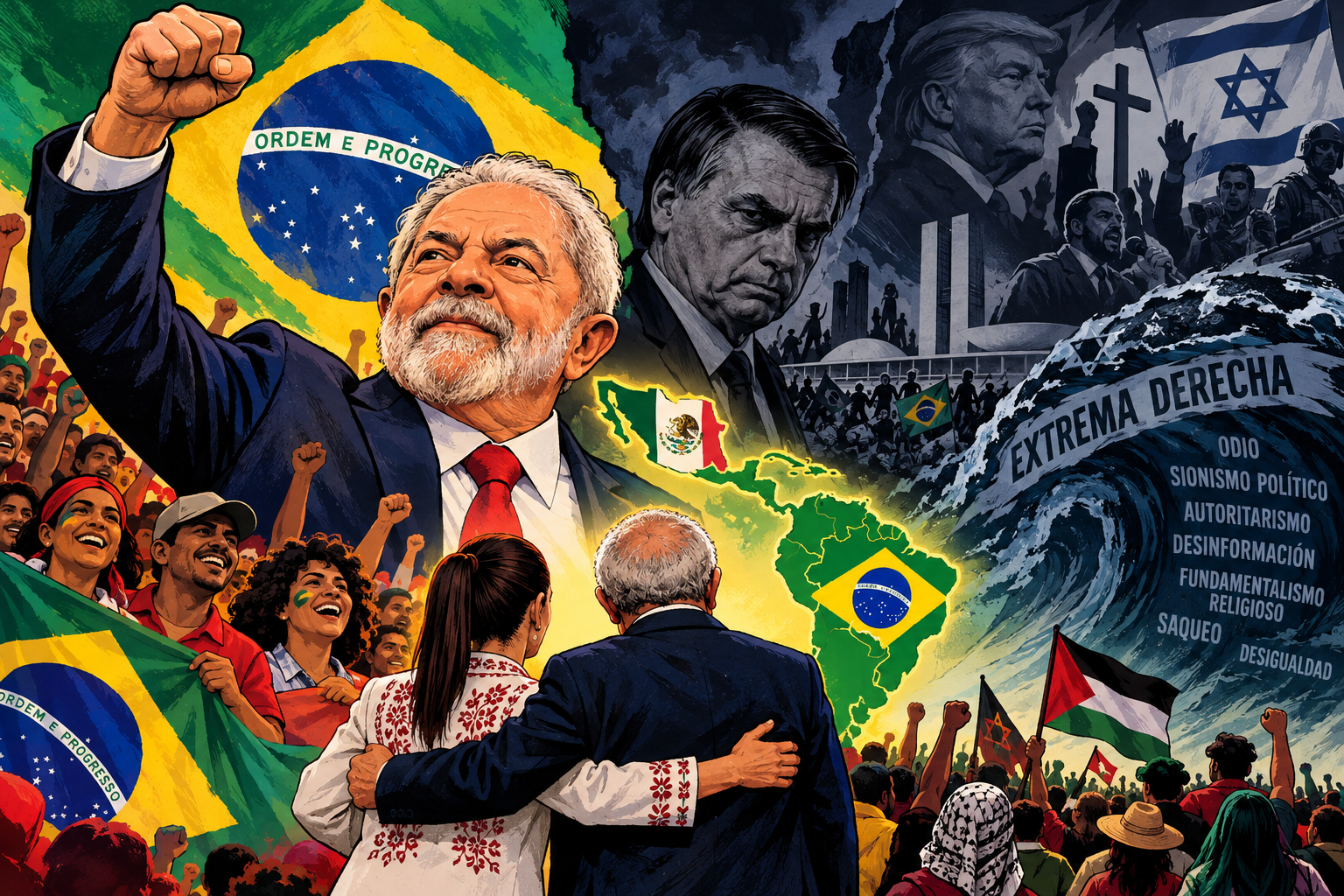

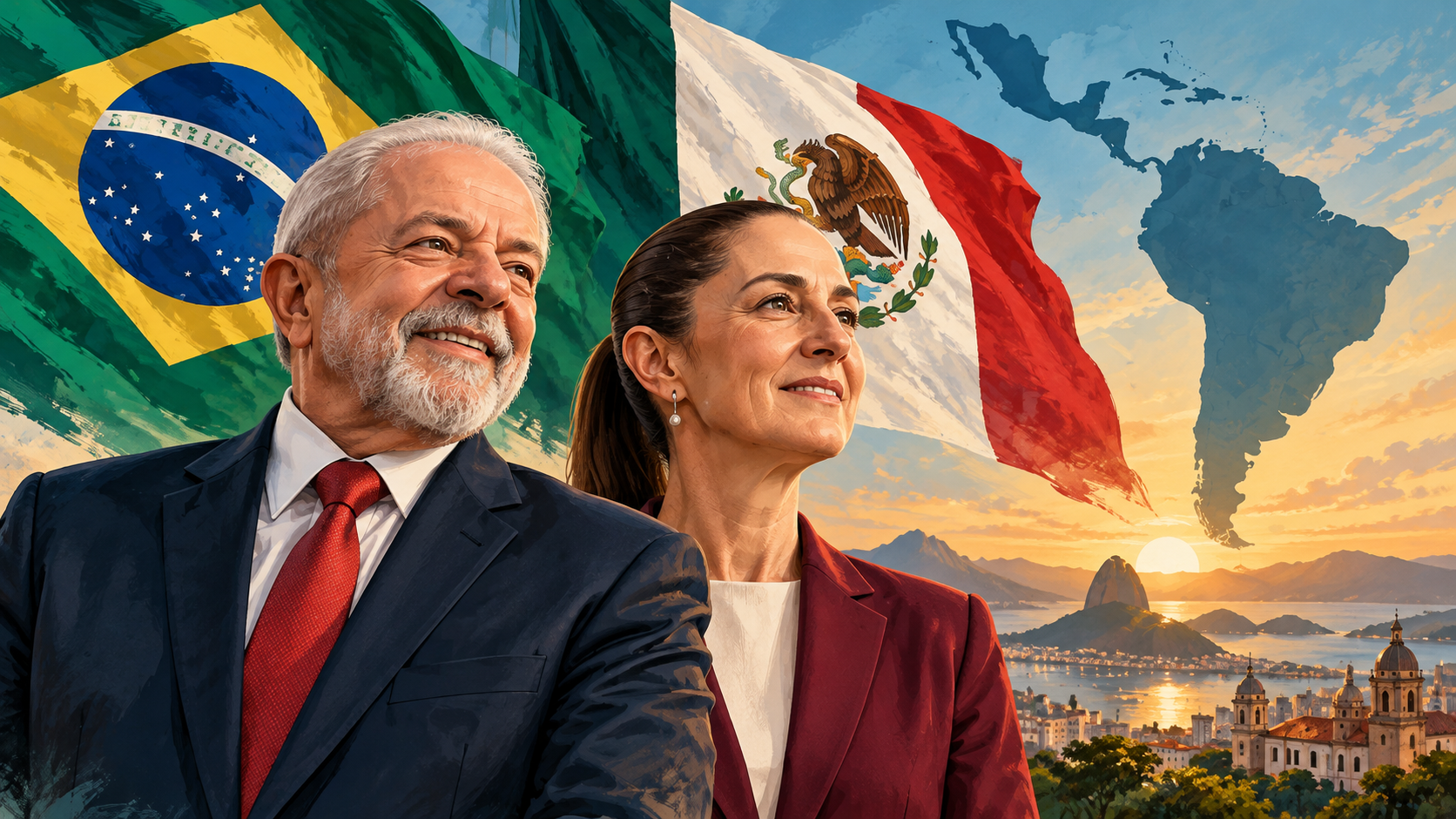
Latin America awoke on October 26 to news capable of changing the region’s political balance. Luiz Inácio Lula da Silva was reelected president of Brazil after defeating Flávio Bolsonaro by 51.79% to 48.21% of valid votes. More than 64 million Brazilians supported his continuation in office, while almost 60 million chose a different project. The victory was clear at the polls, but it revealed a deeply divided country.
The result takes on a continental dimension when we consider who governs Latin America’s two largest economies. Lula will remain in Brazil, and Claudia Sheinbaum remains in Mexico. Both share a political language centered on reducing inequality, sovereignty, and an active role for the state; both, however, face very different economic conditions and international alliances.
The question is unavoidable: can Brazil and Mexico turn that affinity into a project for Latin American cooperation, or will the opportunity be lost amid ideological disputes and national calculations?
A region shifting to the right, but not entirely
The electoral advance of conservative options has changed Latin America’s political map. Argentina, Chile, Colombia, Peru, and Ecuador illustrate, each with its own nuances, the range of right-wing projects now participating in government across the region. They do not constitute a homogeneous bloc: their economic, institutional, and diplomatic policies differ.
In this setting, Lula’s reelection challenges the simplistic reading that all of Latin America is moving in a single direction. Continental politics is more complex than a succession of party banners. The ballot box expresses demands for security, income, effective institutions, and dignity—concerns that no government can address through slogans alone.
The fact that Brazil and Mexico retain progressive administrations does not mean there is a new “pink tide.” More concretely, it means that two major economic and diplomatic centers can promote a shared agenda while negotiating with governments of other political orientations.
Brazilian democracy returns to the center of the debate
Brazil’s campaign had an institutional backdrop that cannot be overlooked. In September 2025, Jair Bolsonaro, the defeated candidate’s father, received a sentence of 27 years and three months in prison for his participation in an attempted coup intended to prevent the transfer of power after the 2022 election. The former president denied the accusations, and his allies challenged the sentence.
After the October 25 election, Flávio Bolsonaro refused to acknowledge defeat and raised challenges. Brazil’s electoral authority, meanwhile, proclaimed the result. In a democracy, dissent and recourse to the courts are legitimate rights; indefinitely rejecting the verdict of the ballot box without sufficient evidence erodes public trust.
The defense of democracy also places obligations on progressive governments. Winning does not grant a blank check to weaken checks and balances, restrict the opposition, or conflate the state with the party. The credibility of any social project depends on respecting the rules that allowed it to reach power.
Brazil and Mexico: political affinity with different interests
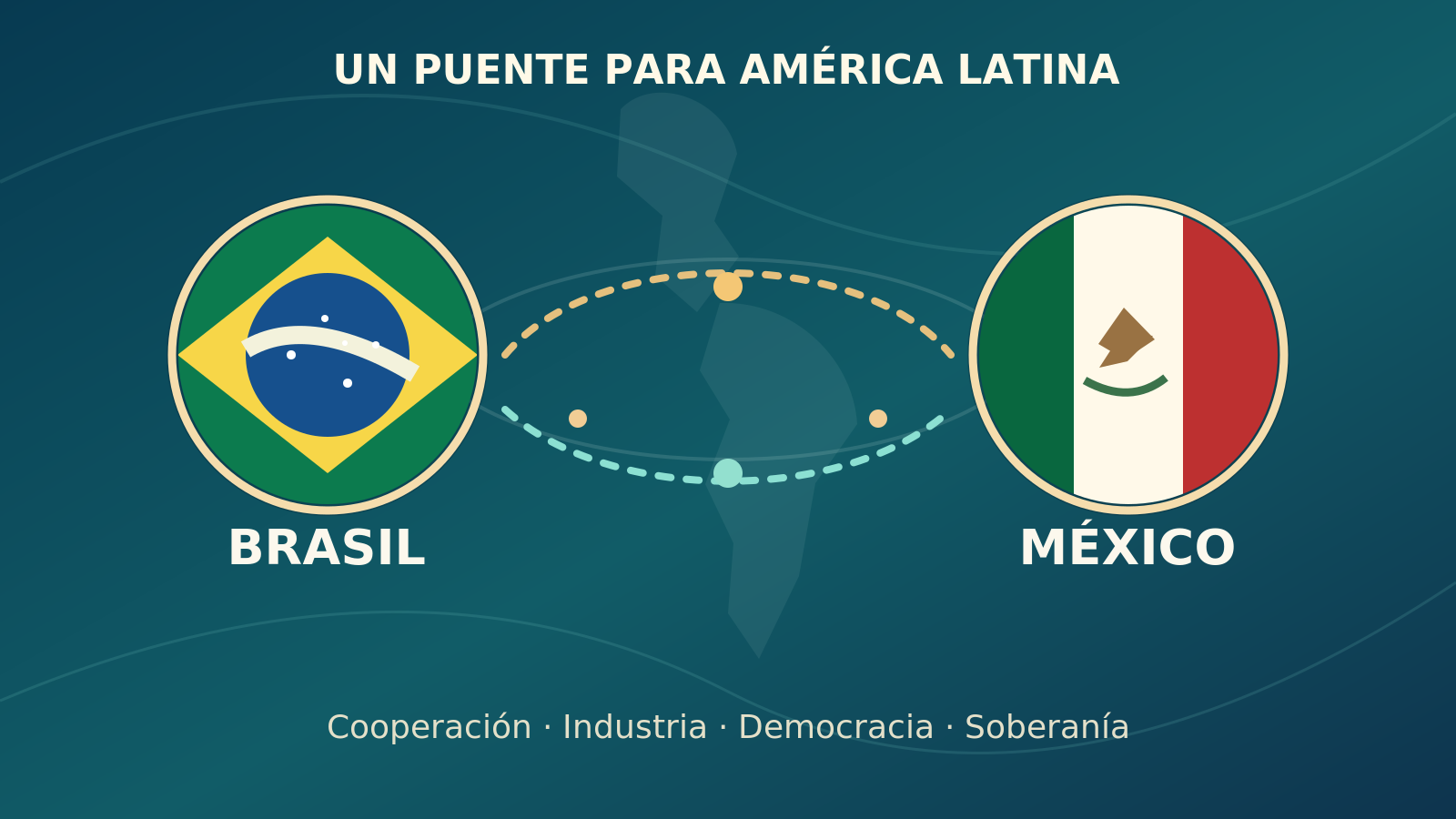
The rapprochement between the two administrations is more than a diplomatic photograph. In August 2026, the Mexico–Brazil Binational Commission reaffirmed an agenda for trade, energy, scientific, and technological cooperation. These are concrete areas: industry, innovation, investment, food security, and productive capabilities that could benefit both markets.
But foreign policy rests on realities. Approximately 80% of Mexico’s merchandise exports go to the United States. For Mexico, the relationship with Washington is a structural condition that runs through employment, industry, and supply chains. Brazil, with its presence in the BRICS and deep trade ties with China, has different scope to diversify its partners.
A Brazil–Mexico agenda should therefore not be defined as an alliance to confront the United States. Its potential strength lies in expanding Latin America’s bargaining power without replacing one form of dependence with another.
The United States, China, and the right to decide
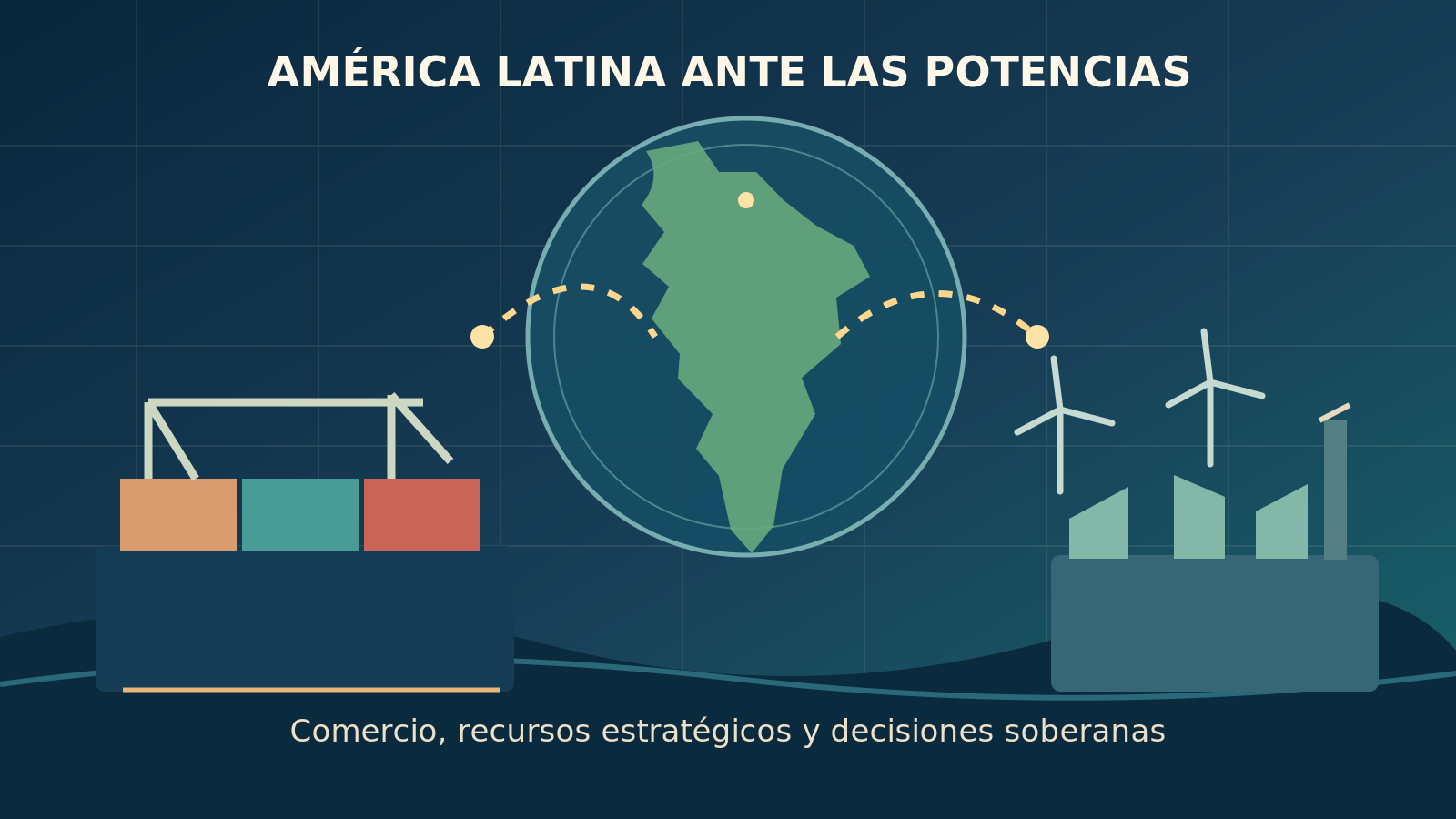
Donald Trump has placed security, migration, trade, and competition with China at the center of his policy toward the hemisphere. For Latin American governments, the issue is not simply choosing whom to trade with, but preserving room to decide matters that directly affect their societies.
Brazil sells raw materials and agricultural products to China, while Mexico is deeply connected to North American industrial supply chains. That dual reality reflects both an opportunity and a vulnerability. Major powers compete for markets, minerals, energy, and technology; Latin America risks being reduced to a supplier of resources if it does not strengthen its own industry and scientific capacity.
Defending sovereignty in the twenty-first century should mean negotiating investment under transparent rules, increasing the value added to exports, protecting the environment, and avoiding agreements that compromise the future in exchange for immediate benefits. Firm speeches are not enough: institutional capacity and economic planning are needed.
The true measure of progressivism lies in everyday life
Latin American integration will be an empty promise if it fails to improve people’s lives. For someone buying groceries each week, looking for work, or relying on a deficient public service, major diplomatic gatherings matter only when they produce tangible results.
Brazil offers a starting point for examining that relationship between social policy and the economy. An October 2026 World Bank report linked poverty reduction to better labor market conditions, increases in real earnings, and the expansion of Bolsa Família. The same report warned that inequality remained high. The two findings must be read together: there has been measurable progress, but a structural problem remains unresolved.
A progressive perspective should not settle for celebrating favorable indicators. It must discuss how to finance sustainable social rights, create better-paying jobs, improve education, and combat corruption. When policies fail to withstand rigorous evaluation, they end up weakening the causes they claim to represent.
Integration cannot depend on two presidents
There is an obstacle that often remains outside official photographs: personal alliances rarely survive changes of government on their own. Latin America has seen numerous attempts at integration that advanced when ideological affinity existed and retreated as soon as electoral majorities changed.
That is why Lula and Sheinbaum’s challenge is not to bring together only left-wing leaders. It is to promote stable agreements, open to governments of different orientations, with verifiable goals in trade, infrastructure, science, and academic mobility. Democracy needs cooperation among those who differ, not obedience among those who agree.
Brazil will also face a Congress leaning to the right, which will limit Lula’s room for maneuver. Mexico will have to protect its decision-making space while managing a close economic relationship with the United States. Regional leadership will require negotiation and an acceptance of limits.
The victory is electoral; the task is historic
Lula’s reelection does not erase the conservative advance or guarantee a new progressive cycle. Nor does it automatically turn Brazil and Mexico into an alliance capable of transforming Latin America. What it does is keep open a space to imagine integration based on development, rights, and diplomatic independence.
The region does not need to exchange one hegemony for another. It needs states capable of protecting their citizens, institutions that accept pluralism, and economies that stop measuring success solely through financial markets.
Lula won an election. Sheinbaum governs a country decisive to the continent’s future. The true significance of both leaders will be measured by what their governments manage to build with other countries and by the verifiable changes Latin American families experience.
Because sovereignty is not a slogan, and progressivism is not a sufficient identity: both acquire meaning when they translate into democracy, opportunity, and well-being.
Sources
- Brazil’s Superior Electoral Court, October 26, 2026
- Mexico’s Secretariat of Foreign Affairs, August 7, 2026
- Congressional Research Service, U.S.–Mexico trade, August 2026
- World Bank, Poverty & Equity Brief: Brazil, October 2026
- Associated Press, Jair Bolsonaro’s conviction, September 2025
- Reuters, the new Congress and Lula’s prospects, October 2026
The three images are original illustrations made for this publication using AI and graphic tools; no agency photographs or third-party visual materials have been incorporated. Their legal status may vary by jurisdiction. The scenes are symbolic.
Colombian American political scientist and Master of Public Administration (MPA) candidate at Post University in Waterbury, Connecticut. He writes about democracy, human rights, institutions, and public affairs.