
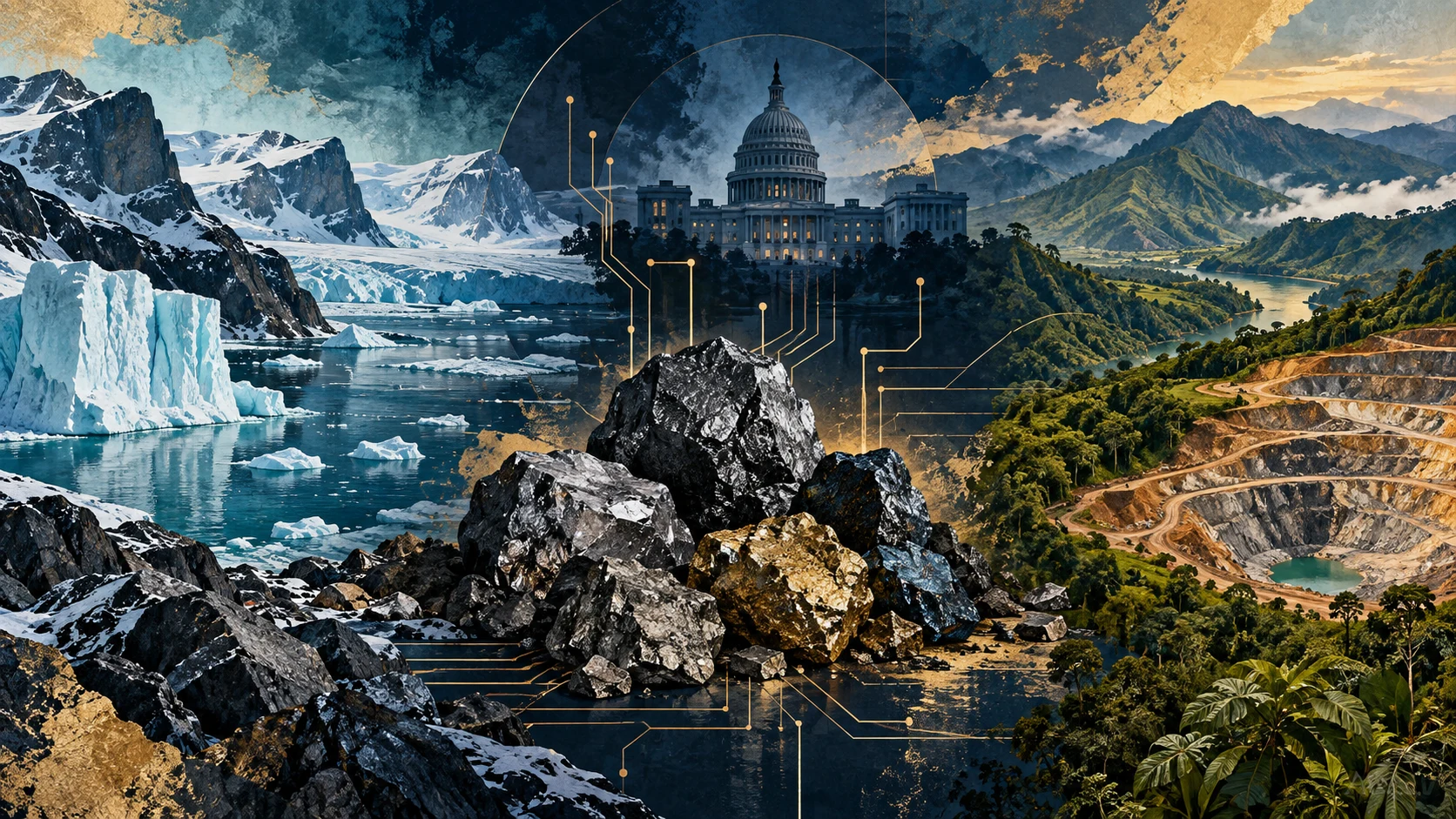
The United States knows what it wants: to secure the resources that sustain its industrial, technological, and military power. What concerns me is that countries such as Colombia celebrate every rapprochement with Washington as a diplomatic triumph without demanding an equally clear explanation of what they will receive and what they are prepared to commit.
The struggle over strategic minerals has consequences that extend far beyond a mining investment. It determines where production takes place, who does the processing, who controls the technology, and who retains the power to decide. For Washington, securing those supply chains is part of national security. For us, accepting a place within them should serve a development strategy of our own. That distinction often disappears amid speeches about friendship and official photographs.
Greenland: security also shapes business
Donald Trump’s pressure on Greenland exposed that logic with a bluntness that is difficult to ignore. In January 2026, the White House confirmed that it was discussing the purchase of the territory. Reuters reported that Trump remained interested in its mineral resources and had not ruled out using force.[1] Treating an inhabited territory as a strategic acquisition reveals how heavily a major power’s interests can weigh against a population’s right to decide its future.
On September 22, the United States, Denmark, and Greenland signed an agreement that would expand the possibilities for a U.S. military presence. The text reaffirms Danish sovereignty and Greenlandic self-determination, but it also establishes restrictions on certain foreign investments in sensitive sectors, including resource extraction. It includes consultations with Washington and provides for entry into force following the relevant parliamentary procedures.[2]
My reading is that this reveals a form of influence that deserves attention: formally preserving sovereignty while placing conditions on the space available to other economic actors. The ability to decide who invests can be as valuable as direct ownership of a mineral deposit.
Greenland shows how territorial defense and access to resources can become part of the same negotiation. Security provides the political framework; within that framework, economic opportunities are also arranged and competitors’ presence is limited.
Rubio in Colombia: securing minerals for whom?
Marco Rubio’s visit to Barranquilla on September 8, 2026, should be examined within that struggle. The secretary of state and Colombia’s foreign minister, Omar Bula, signed instruments concerning critical minerals and civil nuclear cooperation. The U.S. statement expressly identifies rare earths within cooperation on supply chains.[3]
Colombia’s Foreign Ministry explained that the mineral agreement covers mining, separation, processing, geological mapping, recycling, and joint financing. It also stated that implementation would comply with national legislation and the principle of sovereignty over resources.[4]
That statement must become a set of verifiable conditions. Colombia needs to know what processing will take place here, what knowledge will reach our institutions and businesses, and what role the territories where the projects take place will have. A country can be described as a strategic partner while still occupying the least advantageous position in the business.
I interpret Rubio’s visit as part of the U.S. effort to secure supplies and reduce vulnerabilities in relation to its competitors. Trump’s own executive order of March 20, 2025, links mineral production to national security and includes financing to secure global raw materials for U.S. processing.[5] Washington is planning its industrial future. Colombia should negotiate its own with the same clarity.
The memorandum opens an agenda for cooperation; specific concessions and conditions will have to be examined project by project. That is precisely why public debate must begin now. Once contracts, incentives, and regulatory changes are announced, correcting course may prove much harder.
The climate crisis is also a struggle over water
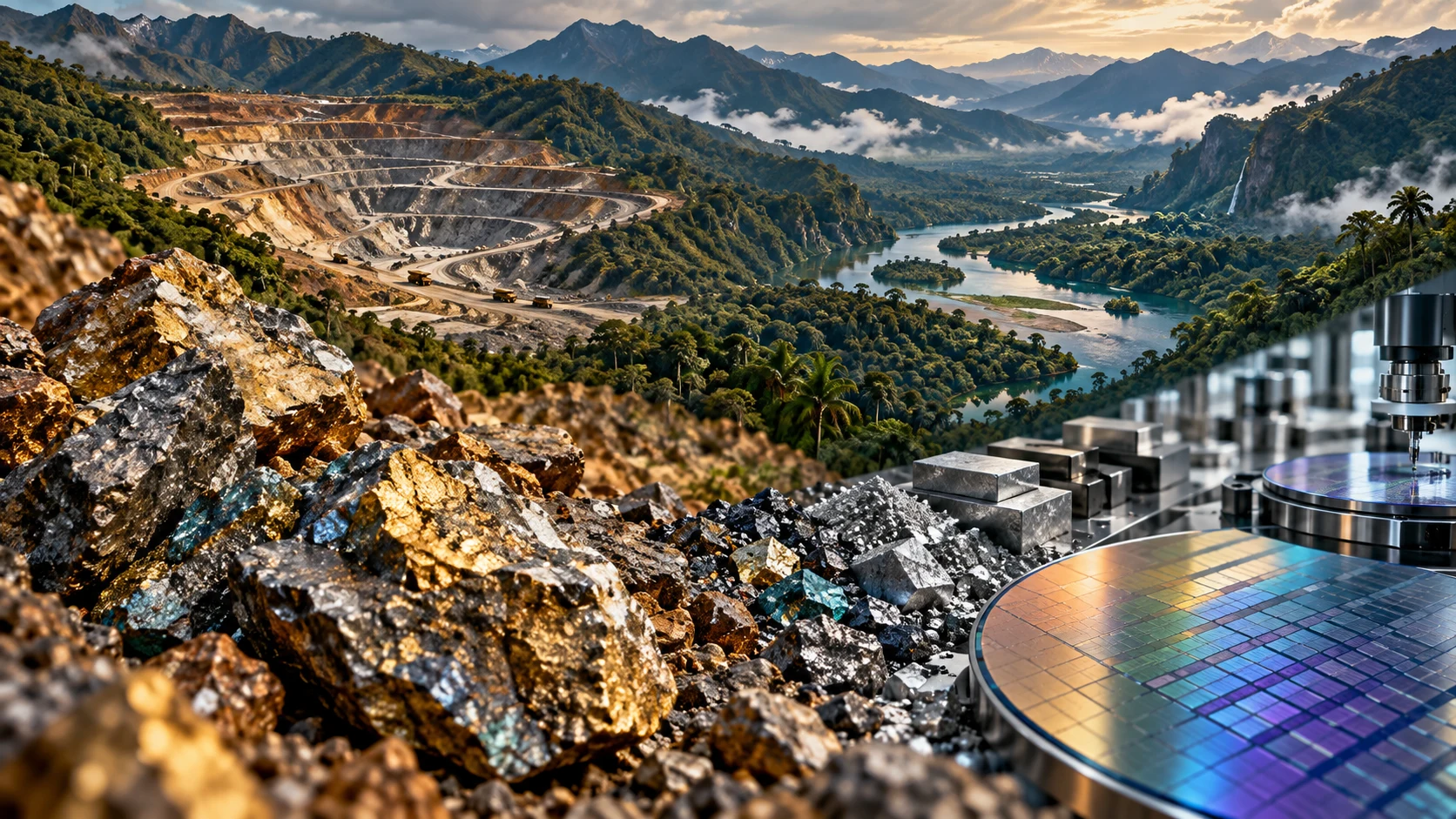
The discussion of minerals is incomplete if it is separated from climate change. In its 2022 assessment, the IPCC concluded that human-caused warming is intensifying the water cycle and worsening existing vulnerabilities. It also estimated that roughly half the world’s population experienced severe water scarcity during at least part of the year, owing to a combination of climatic and non-climatic factors.[6]
That assessment requires us to change how we measure wealth. A mineral deposit has a market price; a watershed that supplies a population sustains daily life, food production, and people’s ability to remain on their land. The discussion must address how much water each project needs, where it will come from, how its quality will be protected, and what will happen when a drought reduces availability. Those answers must exist before extraction is authorized.
I worry that the race to secure minerals will turn climate urgency into a justification for sacrificing ecosystems. The energy transition needs materials, but their usefulness does not erase the consequences of extracting them. In its 2026 report, the International Energy Agency warns that diversification across mineral supply chains is progressing unevenly: refining and manufacturing are lagging behind mining.[7] That imbalance reinforces my concern about a region that takes on extraction while others concentrate the industrial stages.
A just transition must reduce emissions and protect living conditions in the territories that supply resources. There is little value in celebrating cleaner technology if its production chain leaves communities without answers about water, waste, and soil restoration. Each project requires its own assessment, but all must meet that same obligation.
That is why I believe water, forests, and the capacity to confront the climate crisis are also part of our sovereignty. Weakening environmental institutions to accelerate business can reduce our ability to adapt precisely when we need it most. Colombia’s national security includes a family’s ability to drink safe water and farmers’ ability to retain the conditions they need to produce food.
The cost of putting our resources at the service of someone else’s strategy
I am especially concerned that geopolitical urgency may end up being used to weaken environmental assessment. A permit makes it possible to identify risks, impose conditions, and establish responsibilities. Consultation with communities recognizes that a territory has inhabitants, ways of life, and rights. Turning those safeguards into obstacles to be removed in the competition for investment shifts the cost of speed onto the people who live there.
Colombia can make use of its minerals and negotiate with the United States, but it must do so with publicly stated requirements: domestic processing, verifiable technology transfer, environmental obligations, contract transparency, and an effective capacity to impose sanctions. Promises of jobs deserve figures, deadlines, and commitments. The word sovereignty deserves the tools to exercise it.
We must also hold our own leaders accountable. The United States acts according to its interests. Responsibility for defending Colombian interests rests with those who negotiate on our behalf. Celebrating an agreement before explaining its benefits and limits turns diplomacy into publicity.
From Greenland to Colombia, I see the same question: how much power does a territory retain when its resources come to be considered indispensable to another nation’s security? The mechanisms differ, but the concern remains. I want Colombia to participate in the economy of the future with industry, knowledge, and the ability to make decisions. That future must include safe water, protected ecosystems, and the capacity to confront the climate crisis. If all we contribute is what lies beneath the ground, others will build their technological strength with our wealth, and we will once again call dependence development.
Sources
- Reuters, January 7, 2026.
- Agreement among the United States, Denmark, and Greenland, September 22, 2026, preamble and sections IV, X, and XII.
- U.S. Department of State, September 2026.
- Colombia’s Foreign Ministry, September 9, 2026.
- White House, executive order of March 20, 2025.
- IPCC. Climate Change 2022: Impacts, Adaptation and Vulnerability, chapter 4: Water.
- International Energy Agency. Global Critical Minerals Outlook 2026, executive summary.
Colombian American political scientist and Master of Public Administration (MPA) candidate at Post University in Waterbury, Connecticut. He writes about democracy, human rights, institutions, and public affairs.